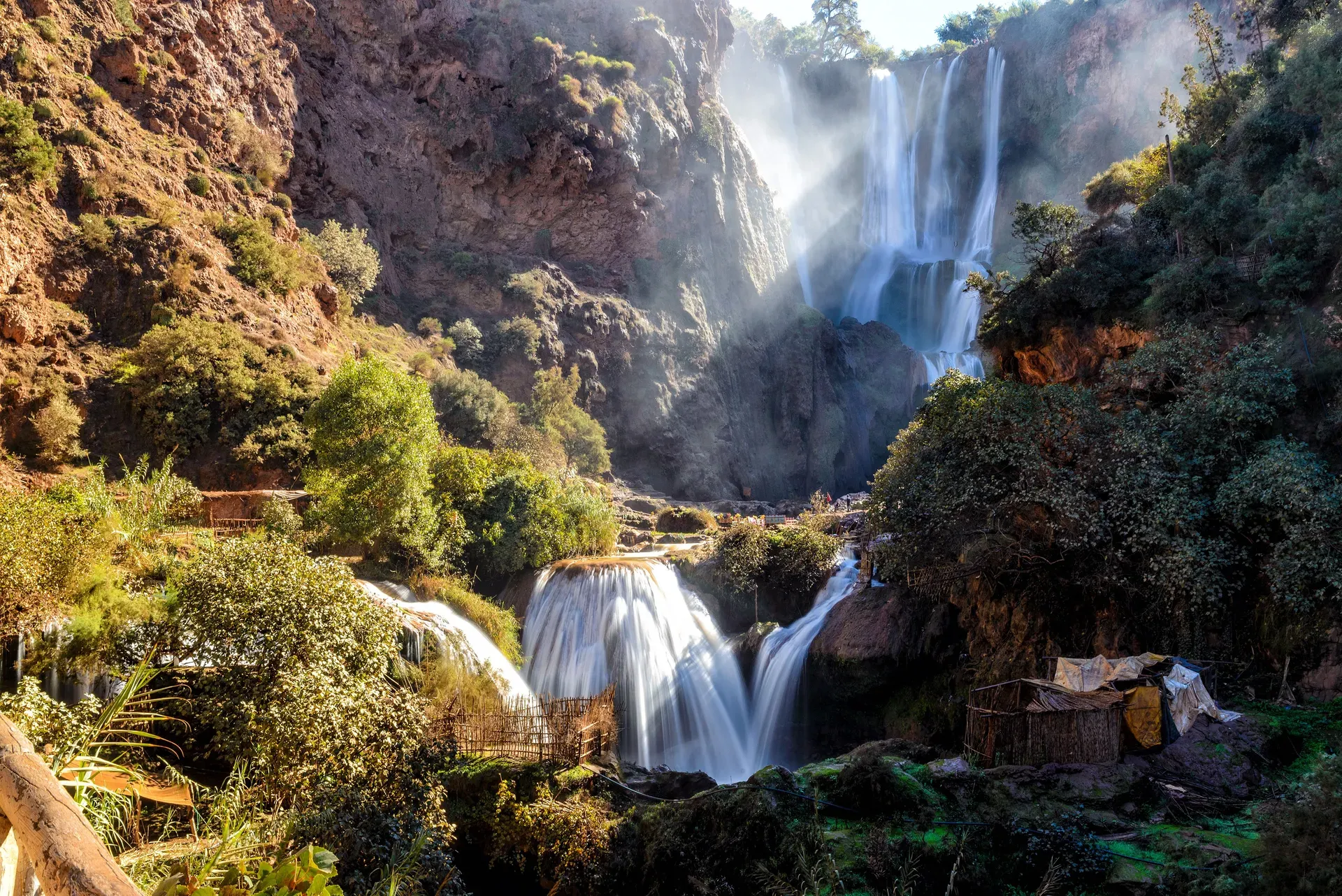
Ouzoud Waterfalls plunge 110 meters into the El-Abid River gorge in Morocco's Azilal province. The site features active travertine rock formations and sustains North Africa's only wild primate population.
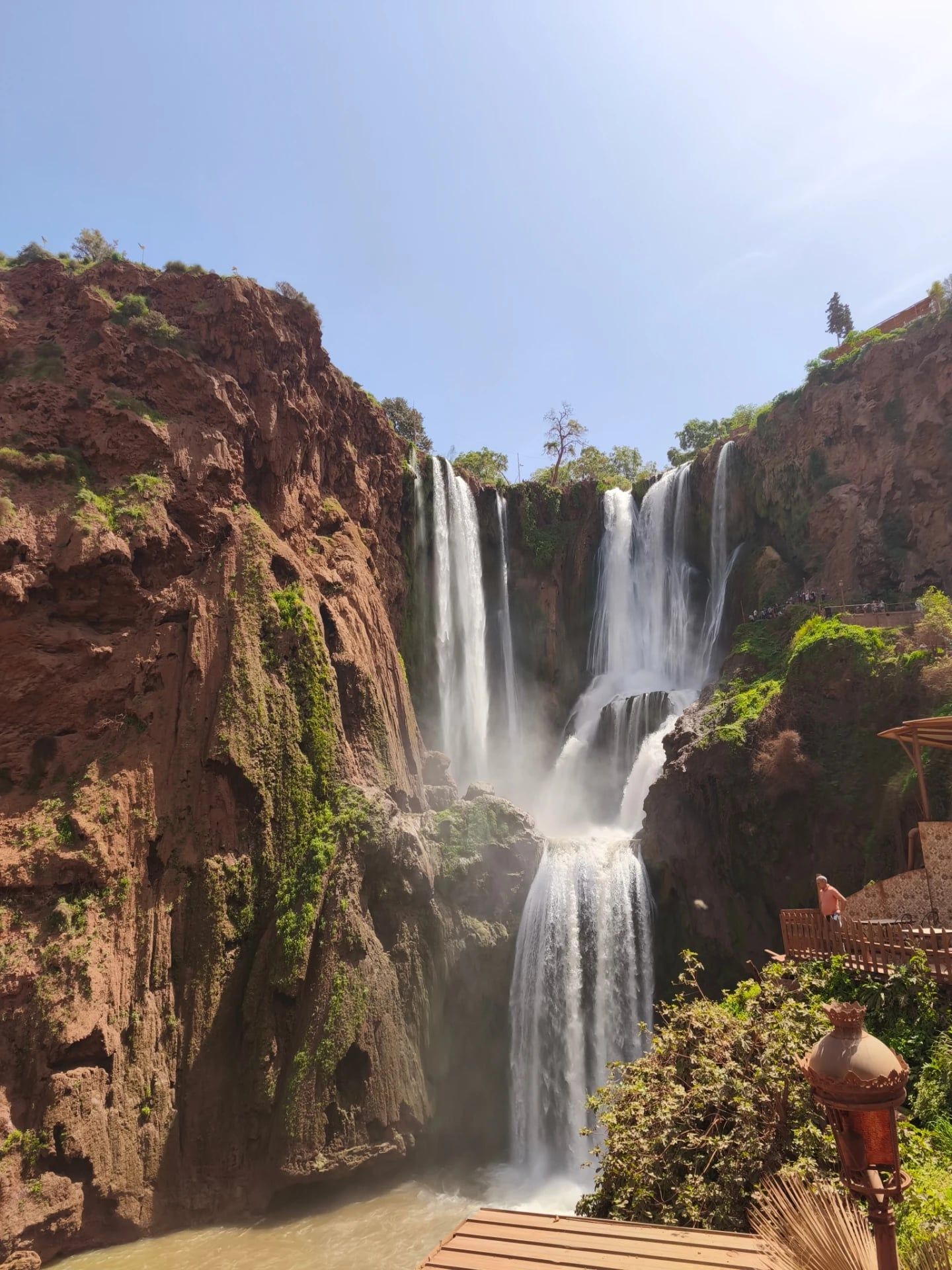
110 meters of water crash down red sandstone cliffs into the El-Abid River gorge. Ouzoud Waterfalls represent the tallest waterfall system in Morocco and North Africa. Located in the Azilal province, the site sits exactly 150 kilometers northeast of Marrakech. The water drops across three distinct tiers, with the longest single plunge measuring 75 meters. The surrounding landscape features a sharp contrast between the white cascading water, the deep red rock, and the dense green vegetation of the canyon.
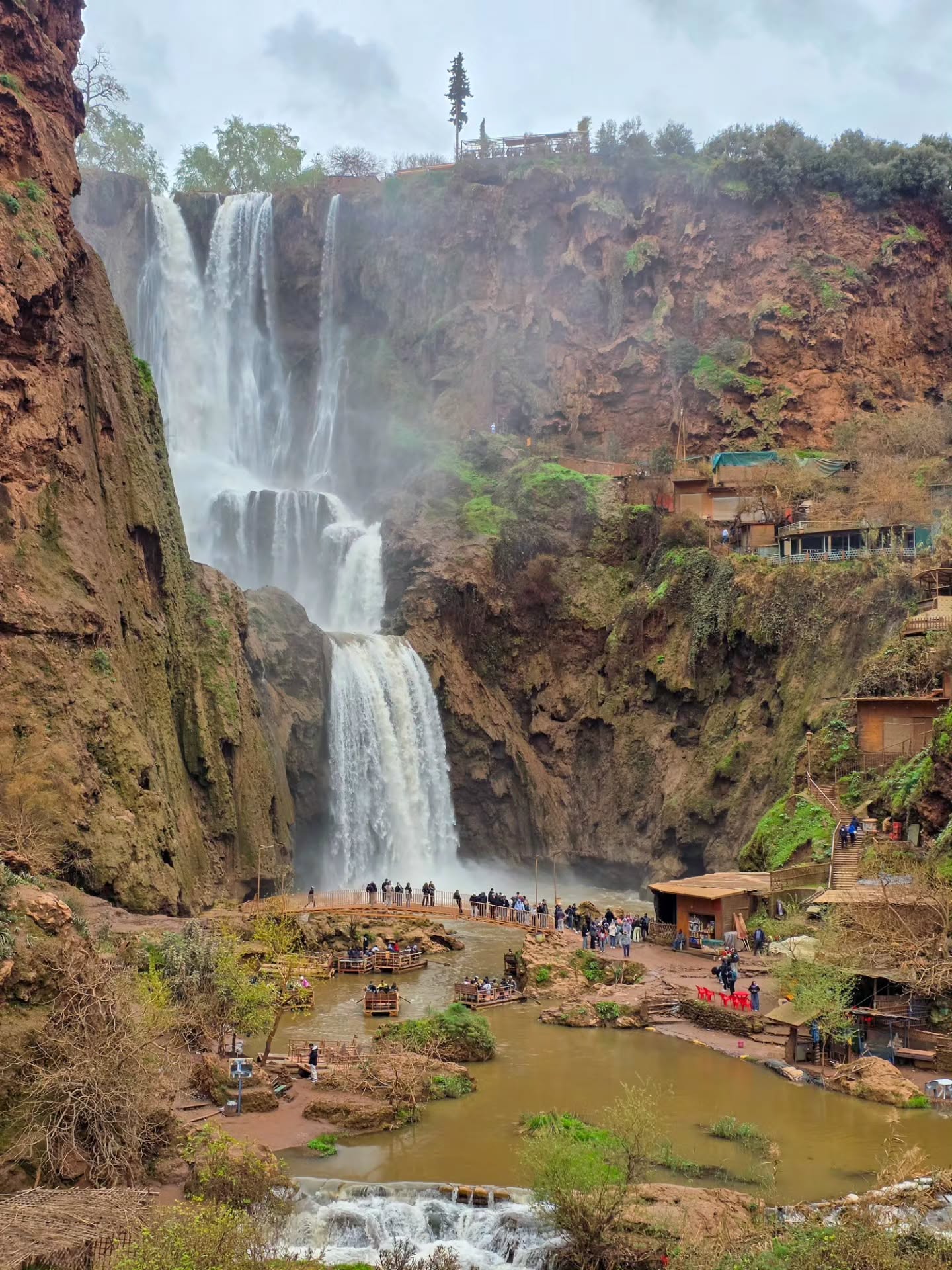
Visitors standing at the top look down into a massive natural amphitheater. The descent requires navigating a steep stairway of up to 600 irregular steps. Dirt paths wind past ancient caves carved directly into the canyon walls. Heavy mist hits your face long before you reach the bottom. The roar of the crashing water drowns out conversation near the main plunge pool. Traditional wooden boats row directly into the spray, charging 20 MAD to take passengers close to the turbulent base.
The water here comes from deep underground springs, keeping the natural pools cold even during the height of summer. Timing your visit dictates the experience. Spring brings powerful water flow from mountain rains and melting snow. The surrounding hills turn exceptionally green during March, April, and May. Summer heat in the canyon becomes punishing, though the natural pools offer relief for hikers. Winter rains turn the surrounding earth into a muddy quagmire, making the steep dirt trails highly treacherous. Heavy downpours can also force the temporary closure of the boat rides due to dangerous currents.
Reaching the base takes about 30 minutes of downhill walking. The return climb is demanding and offers no shortcuts. Elderly visitors or those with knee issues should remain at the clifftop cafes. These upper viewpoints are accessible by car, allowing wheelchair users to view the cascades from above. A typical day trip from Marrakech takes about 8 to 10 hours total. The drive requires 2.5 to 3 hours each way through rural landscapes. The 150-kilometer route passes through extensive olive-growing country and small rural towns.
Local scammers and drivers sometimes collude to drop passengers far from the official entrance, forcing them to pay an unofficial guide fee. Insist on being driven directly to the main parking lot. No guide is required to walk the well-marked trails independently, though local guides are available for 30 to 150 MAD to show you back-trails. Arrive at the falls before 9:00 AM to beat the heavy tour crowds that flood the narrow paths by noon and secure parking near the entrance for 20 MAD.
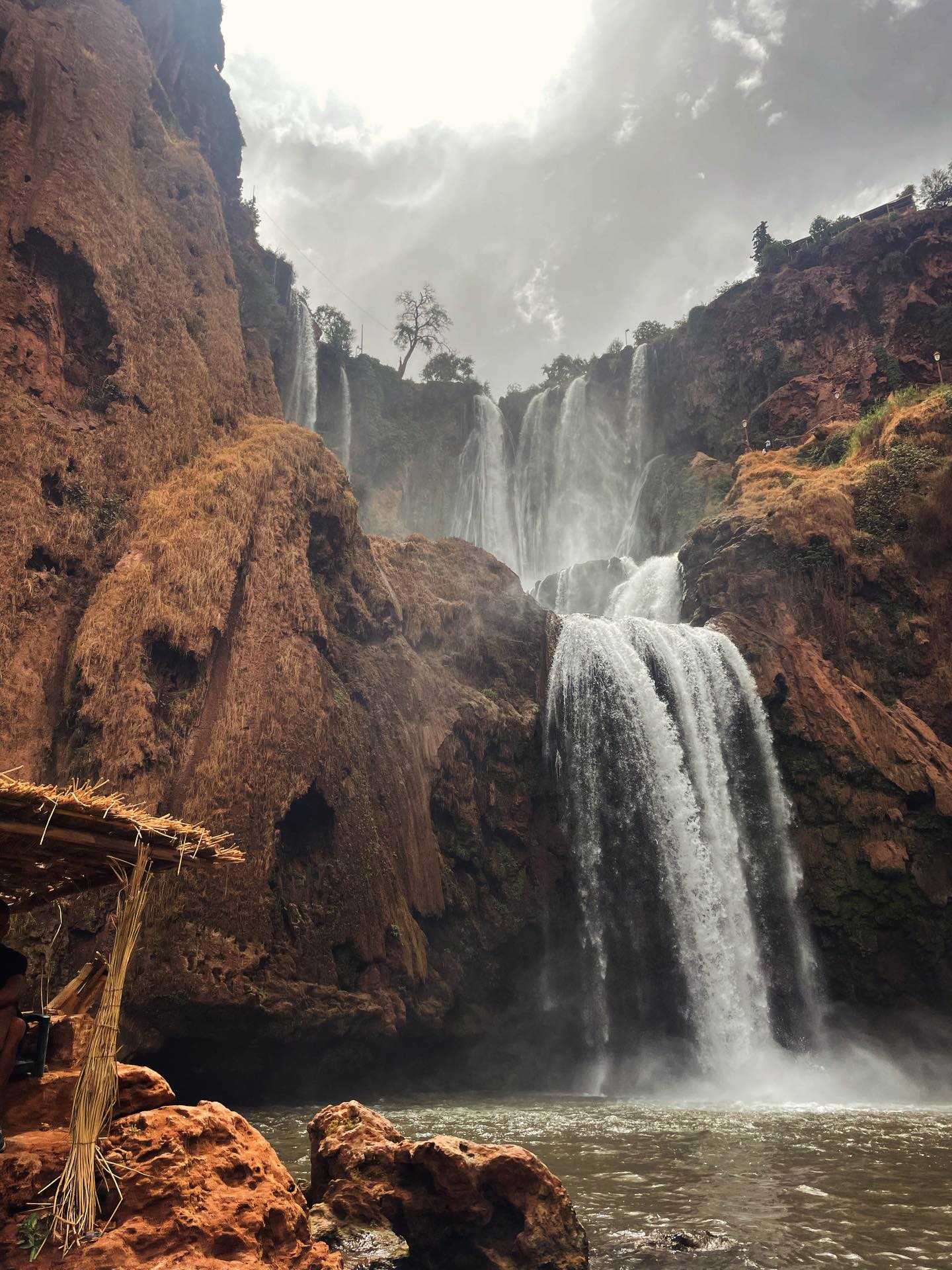
Mineral-rich waters have been building the rock face at Ouzoud for over 20,000 years. Unlike typical waterfalls that erode the earth beneath them, Ouzoud is an active travertine system. The water deposits calcium carbonate as it flows, continually creating new rock formations. This geological process makes the site a living laboratory, predating written history in the Atlas Mountains. The formations grow and shift, altering the exact path of the water over millennia.
The name "Ouzoud" translates to "the act of grinding grain" or "olive" in the local Amazigh language. This title directly references the agricultural foundation of the gorge. Amazigh tribes utilized the immense power of the cascades to operate traditional water mills. They built these stone structures directly into the crevices of the cliffs. The mills ground wheat and pressed olives harvested from the extensive groves lining the riverbanks above.
The geological timeline of Ouzoud stands in stark contrast to the human timeline. While the travertine rock took tens of thousands of years to form, the human manipulation of the river is relatively recent. The Amazigh people engineered small canals to divert water to the mills without compromising the main cascade. This sustainable approach allowed the mills to operate year-round, even during the dry summer months. The stone grinding wheels, some weighing several hundred kilograms, were carved from local rock and transported to the cliffside locations using purely manual labor. These ancient stone structures remain visible today. Some still function, demonstrating centuries-old engineering that harnessed the 75-meter main drop without destroying the natural flow.
The late 20th century brought a shift from pure agriculture to eco-tourism. Paved roads replaced dirt tracks connecting the village to larger towns like Azilal, located 36 kilometers away. Day-trippers from Marrakech began arriving in large numbers, transforming the local economy. Families who previously worked the mills opened small cafes and began operating the wooden boats at the base of the falls. The site transitioned into a major domestic and international destination without losing its original geographical layout.
Despite this modernization, the site operates without official gates, opening hours, or entrance fees. The transition to tourism has preserved the physical structure of the mills while changing their primary use. The integration of modern tourism with ancient infrastructure requires constant adaptation. Visitors can find local cafes occupying some of these historic cliffside spaces. Walk past the first few expensive tourist restaurants to find authentic tagines cooking over charcoal for 60 MAD.
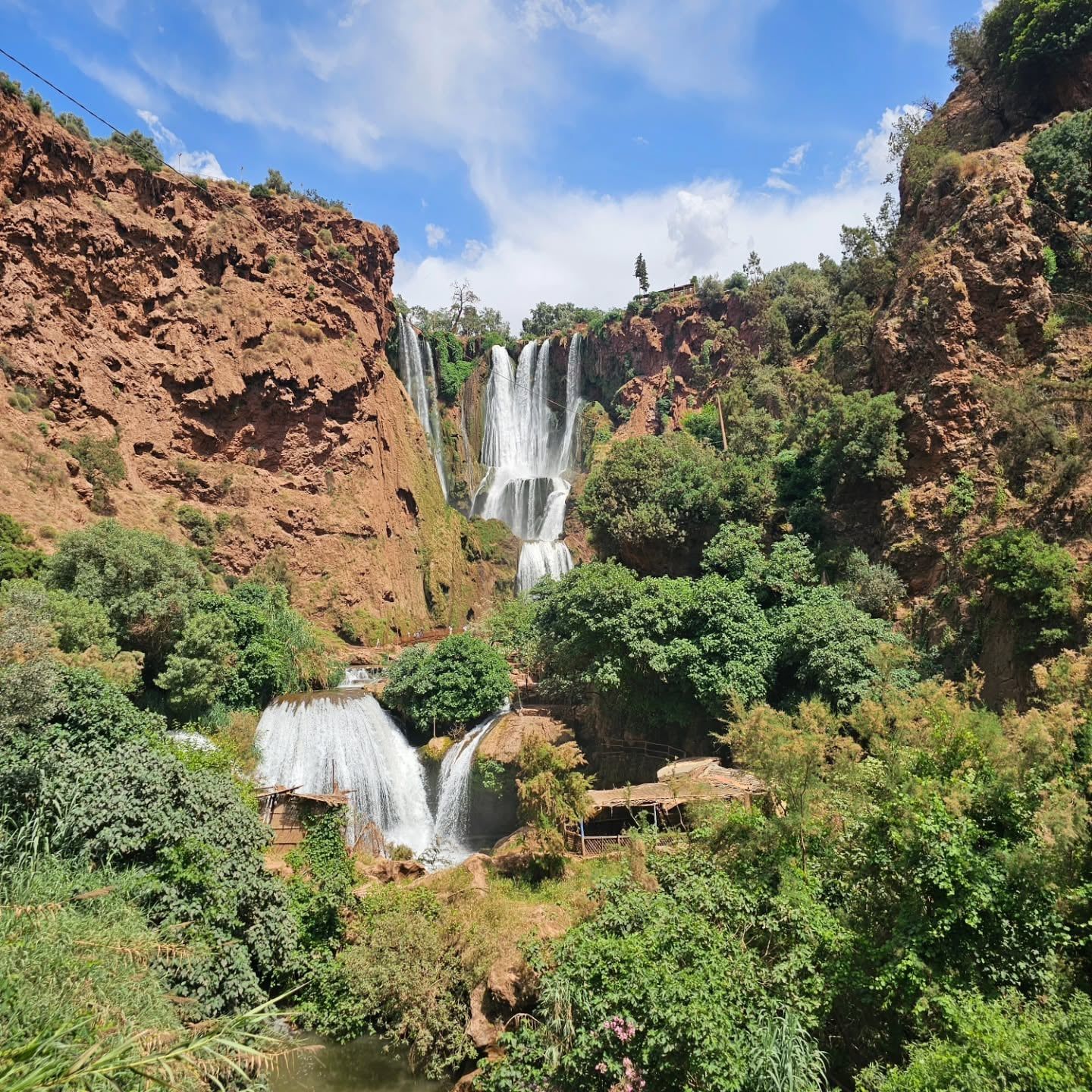
Three distinct tiers break the 110-meter descent of the El-Abid River. The waterfall spans approximately 90 meters across at its widest point during the spring melt. Red sandstone forms the primary structure of the gorge, heavily coated in white and gray travertine deposits. These deposits create a terraced effect beneath the water, altering the flow patterns year by year. The continuous buildup of minerals means the waterfall is technically growing outward rather than cutting backward into the cliff.
Endangered Barbary macaques inhabit the olive trees lining the upper ridges. As North Africa's only wild primate, these monkeys use the gorge as a primary habitat. They swing through the branches and forage along the cliff edges. Visitors can observe them interacting and carrying their young from just a few meters away. The macaques travel in troops and rely on the dense vegetation of the canyon for protection from predators and extreme weather. The flora surrounding the waterfalls includes fig trees, pomegranate bushes, and oleander, creating a dense canopy in the lower sections of the gorge. The red sandstone cliffs contain numerous small caves, some natural and others expanded by early human inhabitants for storage.
The river system feeds into the larger Al-Abid and Draa networks, critical for downstream water security in the region. The water at the base pools into a wide, deep basin before continuing down the canyon. Strong, dangerous currents and hidden rocks sit directly beneath the main 75-meter cascade. Swimmers must stay in the designated calm pools further downstream to avoid serious injury. The force of the water creates a permanent localized microclimate at the bottom of the gorge, keeping temperatures significantly lower than the surrounding plains. The water temperature in the plunge pools rarely exceeds 15 degrees Celsius, providing a sharp shock to swimmers escaping the 40-degree Celsius summer air.
The physical environment changes drastically throughout the day. Morning shadows keep the canyon cool and obscure the lower pools. By early afternoon, direct sunlight penetrates the gorge. The 1.5-hour hiking trail provides multiple vantage points to observe these shifts in light and water flow. Position yourself near the riverside restaurants between 1:00 PM and 3:00 PM. The sunlight hits the heavy mist at the perfect angle during this window, generating vivid rainbows across the base of the falls.
Ouzoud Waterfalls anchor the daily life and economy of the Tanaghmeilt village. The site operates as a shared community resource rather than a state-run park. Local families manage the parking lots, operate the wooden boats, and run the cliffside cafes. This decentralized management keeps the economic benefits within the immediate Amazigh community. The absence of large corporate hotels preserves the rural character of the gorge.
The agricultural roots of the area remain visible in the sprawling olive groves at the top of the gorge. Olive harvesting dictates the seasonal rhythm of the local farmers, just as it has for centuries. The water from the El-Abid River is carefully channeled to irrigate these groves before it plunges over the cliffs. This dual use of the river—for agriculture above and tourism below—demonstrates a practical balance. The ancient water rights and distribution methods are still respected by the local residents. The culinary traditions of the region are on full display along the hiking paths. Tagines are slow-cooked over open charcoal fires, utilizing the local olive oil pressed just a few kilometers away. The scent of woodsmoke and roasting meat mixes with the damp smell of the river.
Interactions with the Barbary macaques require strict boundaries. The monkeys are wild animals, not trained attractions. Feeding them alters their natural foraging habits and increases aggressive behavior. The macaques will target visitors carrying food or wearing bright, reflective items. Local guides constantly remind visitors to respect the wildlife, as the monkeys are a protected species crucial to the ecological identity of the region.
Photography customs also reflect the local culture. While the landscape is free to photograph, taking pictures of local residents requires explicit permission. Women in particular often decline to be photographed. Those who agree typically expect a tip of 10 to 30 MAD for posed shots. Drones are strictly banned without a government permit, and customs officers will confiscate them at the airport. Remove all shiny jewelry before hiking to prevent theft by the macaques, and keep your camera secured on a strap while navigating the slippery 600-step descent. Visitors should carry plenty of cash in Moroccan Dirhams, as there are no working ATMs near the falls. You will absolutely need cash for parking, boat rides, tipping guides, and buying lunch from these independent vendors.
The waterfalls actively build the rock beneath them through calcium carbonate deposits rather than eroding it.
The name "Ouzoud" translates to "the act of grinding grain" or "olive" in the local Amazigh language.
Wild Barbary macaques living in the surrounding olive trees are North Africa's only wild primates.
Traditional water-powered mills built into the cliff crevices still function today.
The longest single drop of the three-tiered waterfall system measures exactly 75 meters.
Sunlight hitting the heavy mist creates vivid rainbows across the base between 1:00 PM and 3:00 PM daily.
The water temperature in the plunge pools rarely exceeds 15 degrees Celsius even during summer.
No, the Ouzoud Waterfalls are completely free to visit. You only need to pay for optional services like parking (10-20 MAD), a local guide (30-150 MAD), or a boat ride (20 MAD).
The waterfalls stand at a total height of 110 meters (360 feet), making them the tallest in Morocco. They cascade down in three distinct tiers, with the longest single drop measuring 75 meters.
Yes, swimming is permitted and popular during the warm summer months. Swimmers must stick to calmer areas away from the main cascade, where currents are much stronger and rocks are slippery.
The falls are located approximately 150 kilometers (93 miles) northeast of Marrakech. The drive typically takes between 2.5 to 3 hours each way, depending on road conditions and traffic.
Yes, the surrounding olive groves are home to wild troops of endangered Barbary macaques. They are North Africa's only wild primates and can easily be spotted swinging through the trees near the paths.
In the local Amazigh (Berber) language, 'Ouzoud' translates to 'the act of grinding grain' or 'olive'. This refers to the historic water mills in the gorge and the abundant olive trees in the region.
The descent to the base of the falls takes about 20 to 30 minutes along steps and uneven paths. The return climb back up is more demanding and involves navigating up to 600 steps.
No, a guide is not required as the main paths from the village to the gorge are well-marked and easy to follow independently. Local guides are available for 30 to 150 MAD to show you back-trails.
Ouzoud is a rare travertine waterfall system, meaning the mineral-rich water actively builds up the rock formations rather than eroding them. These active geological formations are estimated to be 5,000 to over 20,000 years old.
Spring (March to May) is the best time to visit because the waterfalls are at their most powerful due to mountain rains and melting snow. Summer brings punishing heat to the canyon, while winter rains turn the trails into deep mud.
Browse verified tours with free cancellation and instant confirmation.
Find Tours